About this game
Game Introduction
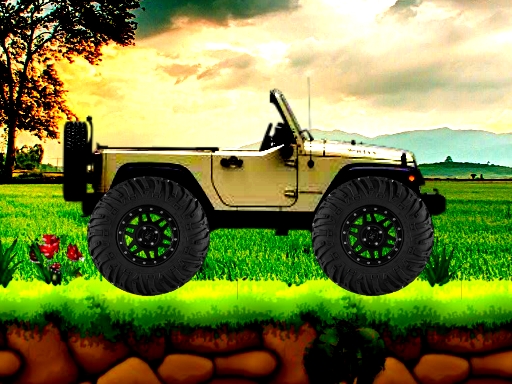
Jeep Wheelie is a 2D arcade racing game that challenges players to keep a Jeep balanced on its rear wheels while driving through various levels. The core objective is to maintain this wheelie as you navigate obstacles and collect dollars to boost your score. What makes this game unique is its focus on balance and timing rather than pure speed, offering a fresh twist on the racing genre. With vibrant 2D graphics and straightforward mechanics, it provides an accessible yet engaging experience for players of all ages. The game tests your reflexes and coordination as you progress through increasingly tricky challenges.
How to Play
Players control a Jeep and must keep it balanced on its rear wheels throughout each level. Simple controls allow you to adjust the Jeep's tilt to maintain the wheelie. As you drive, you will encounter various obstacles—some you can ride over, while others must be avoided by jumping. The key is to time your actions carefully to stay balanced and avoid crashing. Dollars are scattered along the path, and collecting them increases your score. The game is easy to pick up but becomes more challenging as levels progress, requiring precise timing and good hand-eye coordination.
Game Features
This arcade racing game includes multiple levels that gradually increase in difficulty, providing a sense of progression. The 2D graphics are colorful and engaging, creating a fun visual style. Controls are designed to be simple and responsive, making the game accessible to casual players. The scoring system encourages replayability, as players aim to collect all dollars and achieve high scores. The game may also include a variety of obstacles that require different strategies, adding depth to the gameplay. Overall, it offers a compact but rewarding experience typical of arcade racing games.
Tips for Success
To excel in Jeep Wheelie, focus on mastering the balance mechanic first—practice keeping the front wheels up without overcorrecting. Learn the layout of each level to anticipate obstacles and plan your jumps. Collecting dollars is important for a high score, but safety should come first; avoid risky maneuvers that could end your run. As difficulty increases, patience and precision become more important than speed. Regular practice will help you develop the muscle memory needed to handle trickier sections. Finally, stay calm and enjoy the challenge—each attempt is a chance to improve.